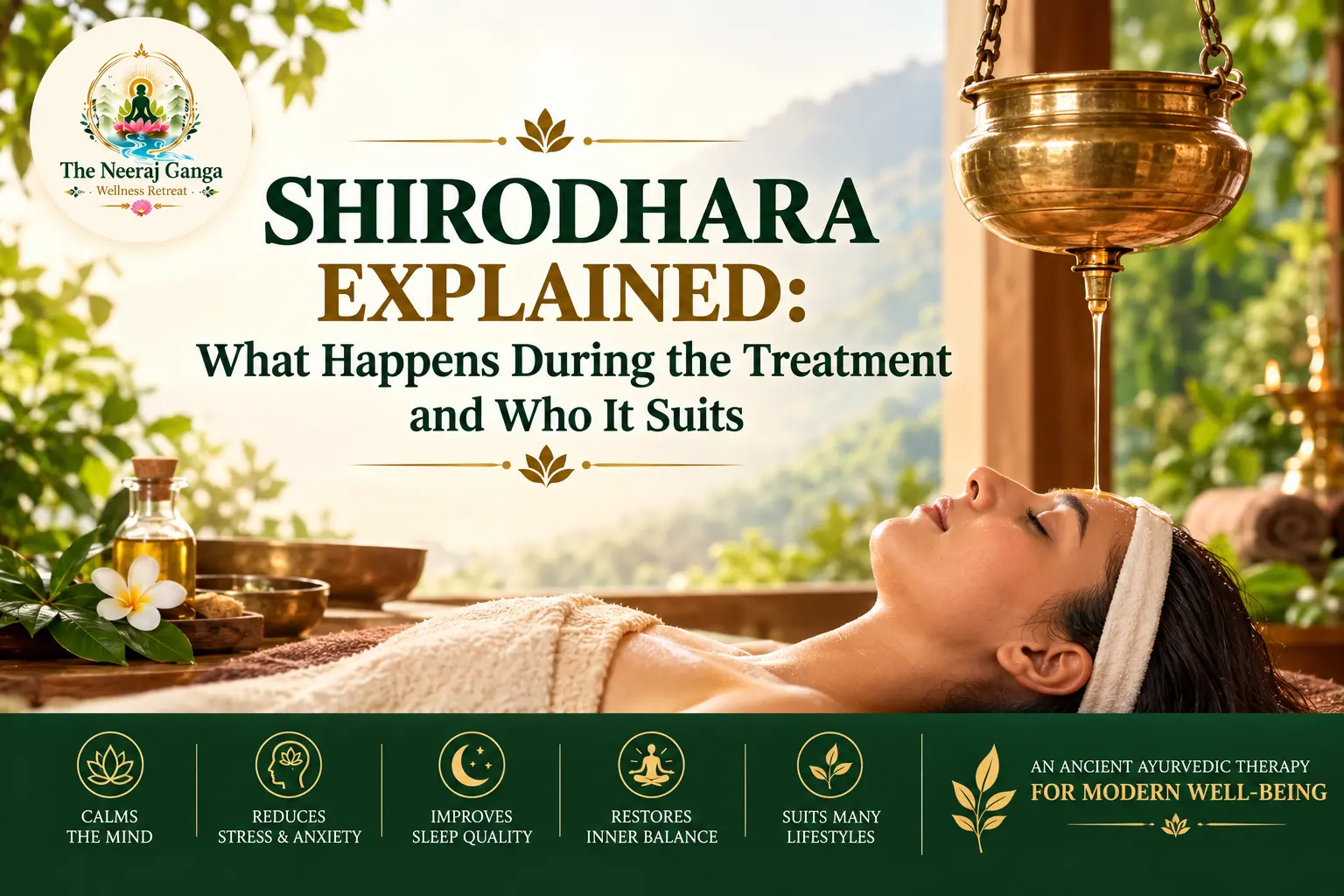
Ask people who have been to an Ayurvedic retreat what they remember most, and a surprising number mention the same thing: a warm stream of oil falling slowly onto the forehead. That is Shirodhara, and it has become one of the best-known therapies in Ayurveda, partly because it looks so unusual and partly because people describe it as deeply calming.
If you are curious about what the treatment actually involves, how it is traditionally used, and whether it might suit you, this guide walks through it plainly, including what is and is not known.
What Is Shirodhara?
The word comes from Sanskrit: shiro means head and dhara means flow. In practice, it is a therapy in which warm liquid, most often medicated or herbal oil, is poured in a steady, gentle stream over the forehead while you lie down.
It is considered part of Ayurveda’s wider toolkit of calming therapies and is sometimes included as one of the supporting treatments in a panchakarma therapy program. The oil is chosen by the doctor based on your constitution and current condition. Sometimes other liquids, such as medicated buttermilk, are used instead, and that variation has its own name, Takradhara.
What Happens During a Session
Many people feel nervous about the unfamiliar, so here is what a typical session looks like.
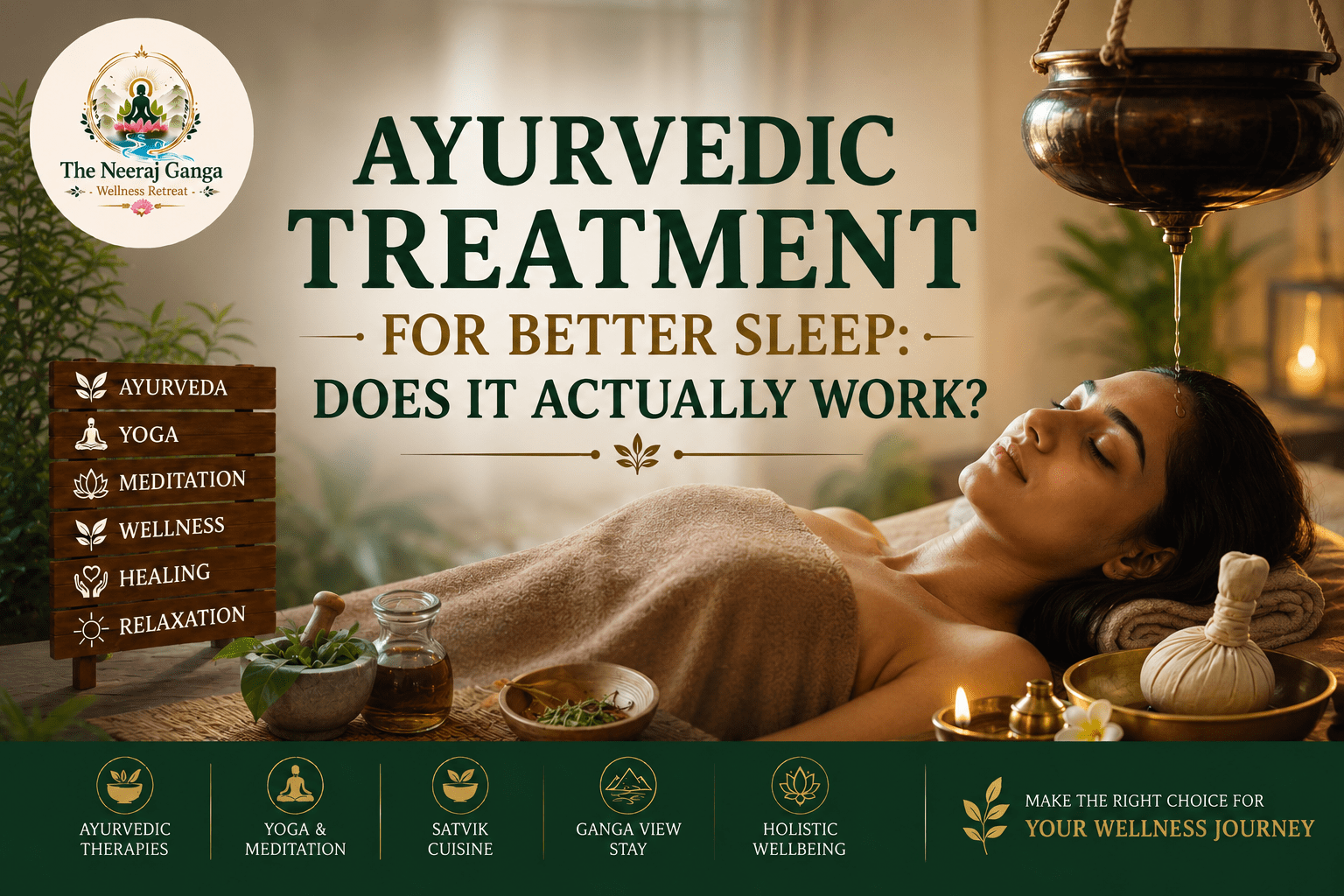
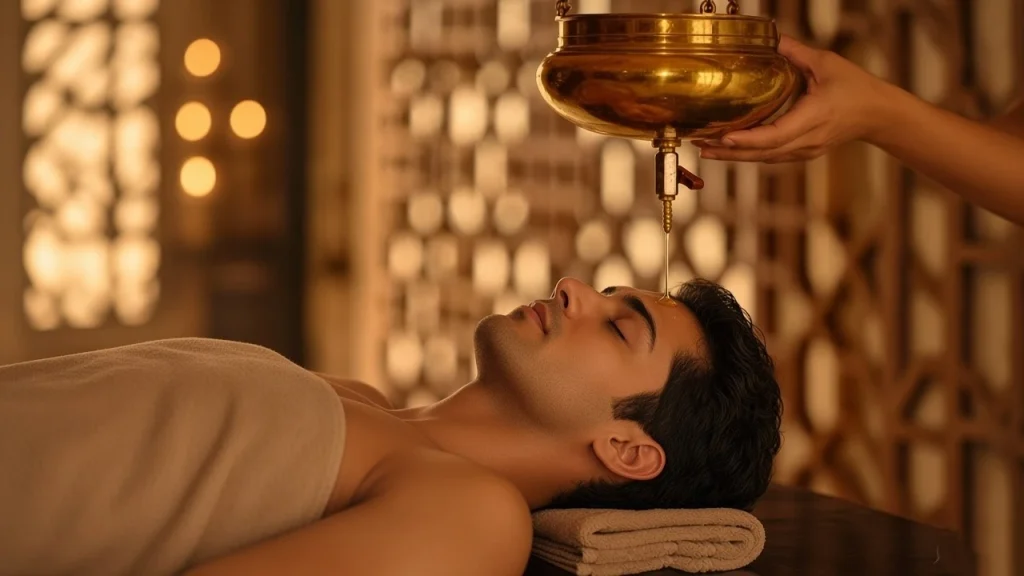
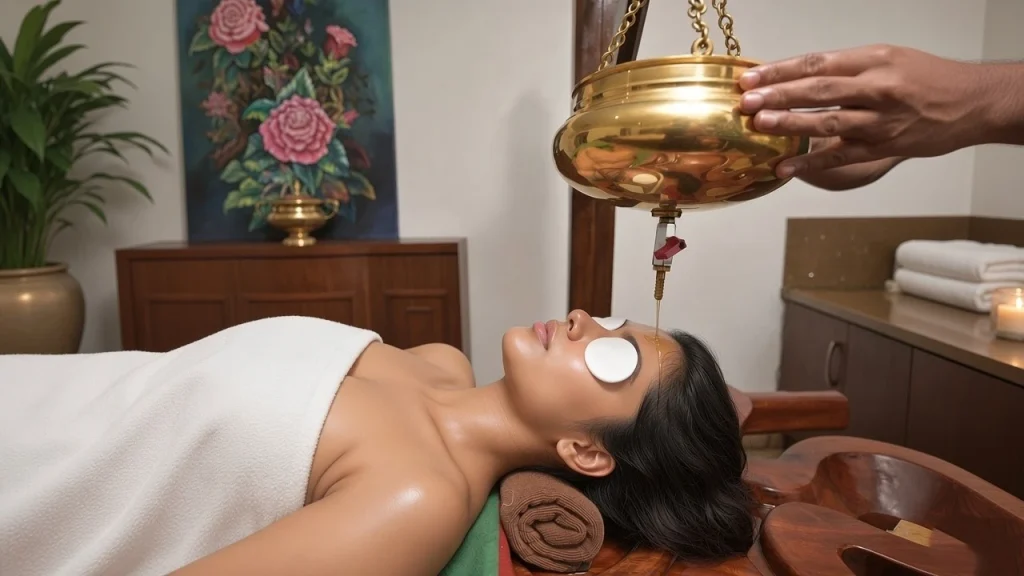
You lie on a treatment table, usually on your back, with your eyes covered or closed. The therapist often begins with a gentle head, neck, and scalp massage to help you settle in. A vessel hangs above your head and releases a thin, continuous stream of warm oil onto the center of your forehead. The therapist moves the stream slowly from side to side, so it travels across the forehead and into the hairline.
The oil is kept warm, not hot, and the flow is steady and light. A session commonly lasts around thirty to forty-five minutes. Afterward, the oil is wiped from your hair and face, and you are usually encouraged to rest rather than rush off. Many guests describe a heavy, sleepy, deeply quiet feeling, and some find they drift into sleep during the treatment.
How It Is Traditionally Used
In Ayurveda, Shirodhara is traditionally associated with calming the mind and the nervous system. It is often discussed in connection with stress, mental tiredness, restlessness, and difficulty sleeping, which in Ayurvedic terms are commonly linked to an aggravated Vata dosha. If you would like to understand how that fits together, you can read about how Ayurvedic treatment approaches better sleep.
Because people search for Shirodhara for stress and Shirodhara for sleep, it is worth being honest here. These uses come from traditional practice and from the experience of practitioners and guests. Scientific research on Shirodhara exists, but much of it is small in scale, so it is best described as a relaxing traditional therapy rather than a proven treatment for any condition. If you are struggling with persistent anxiety, depression, or insomnia, please speak to a doctor, and treat Shirodhara as a complement to medical care, not a replacement.
Why a Series Often Works Better Than One Session
Shirodhara is rarely a one-time treatment in a traditional setting. It is more often offered on consecutive days, because the calming effect is understood to build with repetition. The number of sessions is decided by the doctor and depends on your goals and your plan, which is one reason a short retreat can feel very different from a single spa appointment.
It also tends to work best alongside the rest of the day. Regular meals, early nights, gentle yoga, and quiet time all support what the therapy is trying to do. For a wider look at how a retreat fits these pieces together, see our guide to how Ayurveda, yoga, and Ganga-side living work together.
Who May Need to Be Careful
Shirodhara is gentle, but it is not suitable for everyone, and the choice of oil and timing matters. Please check with a doctor first if any of the following apply:
- You are pregnant
- You have a fever, a heavy cold, or sinus congestion
- You have a scalp infection or a skin condition on the head
- You have had a recent head injury
- You manage a medical condition or take regular medication
This is why a consultation comes before treatment in any trustworthy retreat. The doctor reviews your health history and decides whether Shirodhara is appropriate, which oil to use, and how many sessions make sense.
What to Expect Afterward
Plan to rest after a session. Many people feel relaxed and a little drowsy, and it helps to avoid rushing, loud environments, or cold air on the head straight afterward. Practitioners often advise keeping the head warm and washing the hair later with warm water, though the exact guidance depends on the oil used and your doctor’s advice.
Shirodhara at a Retreat in Rishikesh
Rishikesh has a long tradition of Ayurveda and yoga, and the quiet setting beside the Ganga suits a therapy that is all about slowing down. If you are considering Ayurvedic treatment in Rishikesh, India, ask any retreat you are comparing a few simple questions: Will a doctor assess me before the therapy? Is the oil chosen for me? How many sessions are suggested, and why? Clear answers are a good sign.
Frequently Asked Questions
Is Shirodhara painful or uncomfortable?
No. The oil is warm and the stream is gentle. Most people find it deeply relaxing, though some feel emotional or very sleepy during it.
How long does a session last?
Commonly around thirty to forty-five minutes, though this varies with the plan and the therapist.
How many sessions do I need?
It depends on your goals and your doctor’s assessment. In a traditional setting it is usually done as a series over several days.
Can I have Shirodhara if I am pregnant?
Please check with a doctor first. Pregnancy is one of the situations where extra caution is advised.
Will it help with sleep and stress?
It is traditionally used for both and many people find it calming, but the evidence is limited. It should complement, not replace, medical care for ongoing problems.
Is Shirodhara the same as Panchakarma?
No. Panchakarma is a full detoxification process. Shirodhara is a single calming therapy that is sometimes included alongside it.
A Calm, Unhurried Therapy
Shirodhara is simple in what it does and slightly mysterious in how it feels, which is part of why people remember it. Understanding what happens, what is known, and who should be careful makes it much easier to decide whether it belongs in your plans.
If you would like to experience it as part of a doctor-guided program, you can learn more about The Neeraj Ganga Wellness Retreat, an Ayurvedic wellness retreat in Rishikesh beside the Ganga.