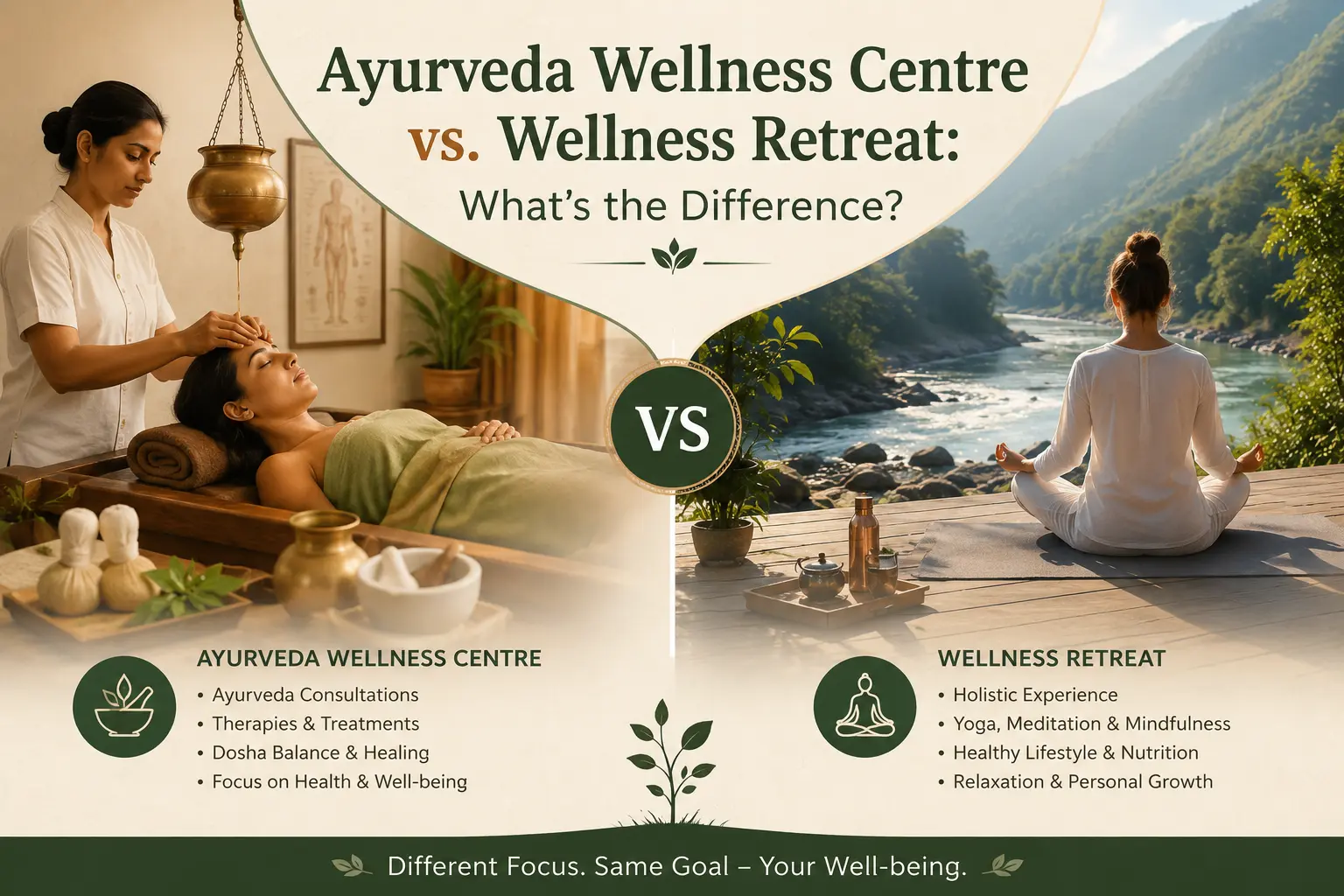
Search for an “Ayurveda wellness centre in India” and a “wellness retreat in India” and you’ll notice something odd: a lot of the same businesses show up for both terms. That’s not necessarily wrong, some genuinely offer both, but the two words describe fundamentally different experiences, and knowing the difference before you book saves you from arriving somewhere that doesn’t match what you actually needed.
The Core Difference: Duration and Purpose
A wellness centre is generally built around single visits or short, individual treatments. You go in for a specific therapy, a consultation, or a massage, and you leave the same day. It’s closer to how you’d think about visiting a clinic or a day spa, focused, transactional, and not necessarily tied to where you’re staying.
A wellness retreat is a multi-day stay where accommodation, meals, and treatment are combined into one continuous experience. The value isn’t just the individual therapies, it’s the accumulated effect of several days of consistent treatment, routine, and environment working together, something a single visit to a centre genuinely can’t replicate.
Neither is inherently better. They solve different problems.
When an Ayurveda Wellness Centre Makes Sense
You live locally or are already staying somewhere else. If you’re based in or near a city with a good Ayurvedic centre, or you’re already on a trip and just want to add a specific treatment, a centre visit fits naturally without requiring a separate stay.
You need a specific, targeted treatment. A single therapy like Abhyanga or Shirodhara for stress relief, or a follow-up consultation after a previous program, doesn’t need multi-day accommodation attached to it.

You’re testing whether Ayurveda is right for you. A centre visit is a lower-commitment way to experience a genuine Ayurvedic consultation and one or two therapies before deciding whether a longer retreat stay makes sense.
When a Wellness Retreat Makes More Sense
You’re pursuing something that requires sustained treatment. This is the clearest dividing line. Panchakarma, for example, generally needs a minimum of 7 days to follow its proper structure, preparation, main procedures, and recovery, something a single centre visit simply can’t accommodate.
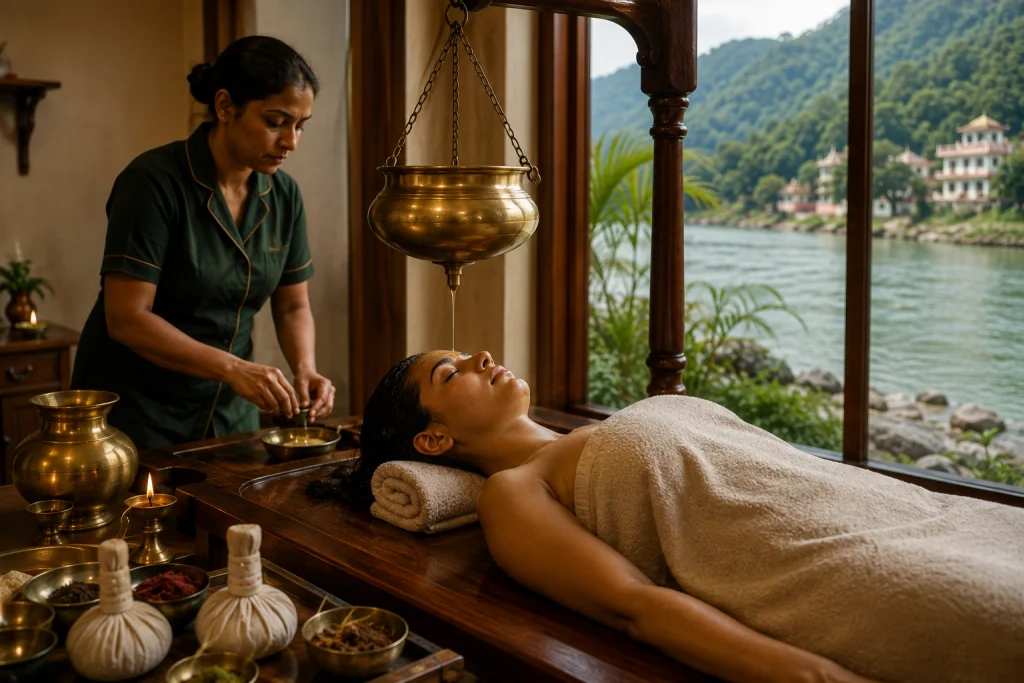
You want your environment to be part of the treatment. A retreat lets your surroundings, a riverside setting, consistent daily rhythm, distance from your usual routine, work alongside your treatment rather than being a separate consideration. That combination is genuinely part of why longer stays tend to produce more lasting change than isolated sessions.
You want integrated meals and routine, not just treatment. At a retreat, food, rest, and daily structure are typically planned around your program. At most standalone centres, you’re responsible for managing meals and routine yourself between visits, which limits how connected the experience actually is.
How to Evaluate Either One, Honestly
Regardless of which format you’re considering, a few questions apply equally:
Does it start with a real consultation?
Whether it’s a single-day centre visit or a 10-day retreat, a qualified Ayurvedic doctor should assess you before recommending treatment. This matters more than the format itself.
Are practitioners actually qualified, not just trained in specific techniques?
A therapist can deliver a technically good massage. Only a qualified doctor can properly assess dosha imbalance and design an appropriate plan, ask directly who’s overseeing your care.
Is the claimed duration or format actually sufficient for what you’re trying to achieve?
A centre offering a “Panchakarma treatment” in a single session, or a retreat compressing a full detox program into two days, isn’t really delivering what the name implies. Match the format to what the therapy genuinely requires, not the other way around.
What This Looks Like in Practice
At The Neeraj Ganga Wellness Retreat in Rishikesh, the holistic framing isn’t a separate feature, it’s the structure the whole stay is built around. Every guest begins with a consultation with our Ayurvedic doctor, which shapes not just which therapies you receive, but how your meals, daily schedule, and overall program are planned together.
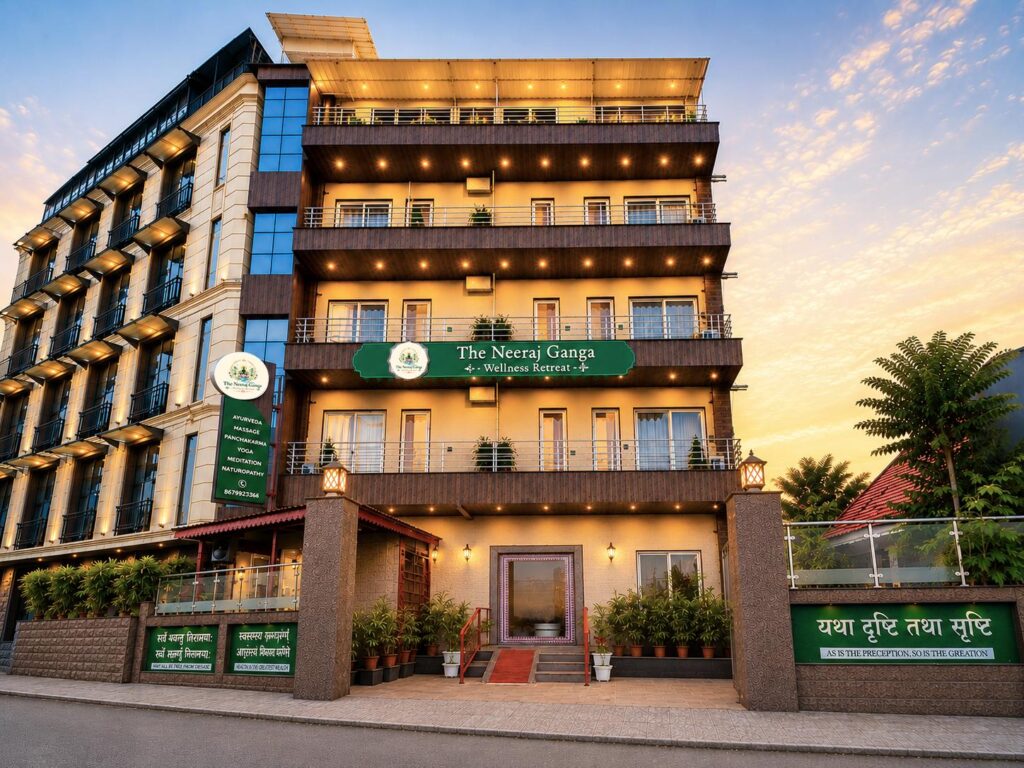
For guests who need a specific, targeted treatment or want to experience a genuine Ayurvedic consultation without committing to a longer stay, individual sessions are available in the same way a dedicated centre would offer them. For guests pursuing something that requires sustained treatment, structured Panchakarma, a full detox, or a genuine reset from chronic stress, our retreat packages combine that same consultation-led approach with accommodation, Satvik dining, daily yoga, and distinctive touches like our traditional copper bathtub, running from a 3-Day Reset through a 10-Day Panchakarma transformation.
This flexibility reflects founder Dr. R.K. Gupta’s four decades in healthcare and Ayurvedic practice: not every guest needs the same format, and being honest about matching the right format to your actual goals, rather than pushing everyone toward the longer, higher-value stay, is part of how genuine Ayurvedic care is meant to work.
So Which Should You Choose?
If you need a specific, targeted treatment, or you’re simply curious about Ayurveda without committing to a longer stay, a wellness centre is a reasonable, lower-commitment starting point. If you’re pursuing something that requires sustained treatment, real detox, structured Panchakarma, or a genuine reset from chronic stress, a wellness retreat is built for exactly that, and a single centre visit likely won’t get you there.
The honest answer is rarely “one is better.” It’s matching the format to what you’re actually trying to accomplish, and at a retreat set up to offer both formats, that decision can even be made together with your Ayurvedic doctor during your first consultation, rather than before you’ve had a proper assessment.
Frequently Asked Questions
Is an Ayurveda wellness centre cheaper than a wellness retreat?
Generally yes, per visit, since you’re not paying for accommodation and meals. But for something like Panchakarma that requires multiple consecutive days, several single-day centre visits can end up costing more overall than a properly structured retreat package, without delivering the same integrated result
Can I do Panchakarma at a wellness centre instead of a retreat?
effectively. Panchakarma requires a structured, multi-day sequence of preparation, treatment, and recovery. A centre offering “Panchakarma” as a single session isn’t following the actual therapeutic process, regardless of what it’s called.
How do I know if a business calling itself a “wellness centre” is actually a retreat, or vice versa?
Check whether accommodation is included and whether the program is designed as a multi-day, integrated experience, or built around individual, bookable sessions. The name alone isn’t always a reliable guide, the actual structure is.
Should I visit a centre first before committing to a longer retreat?
It’s a reasonable approach if you’re new to Ayurveda and want to experience a genuine consultation and a therapy or two before deciding whether a full retreat stay makes sense for you.