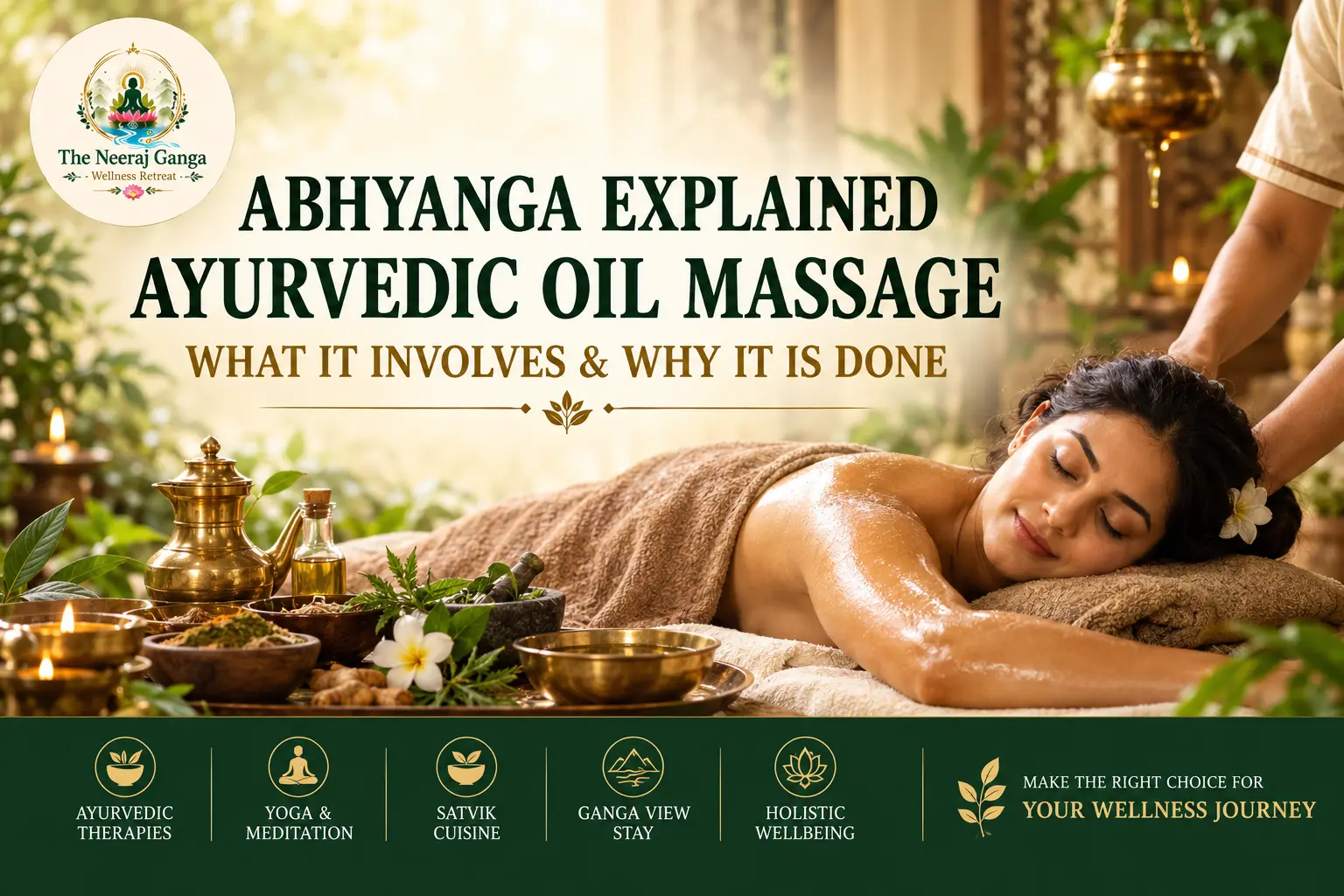
If you look through the daily routine of almost any Ayurvedic retreat, you will find one therapy that appears again and again: a warm oil massage called Abhyanga. It is one of the oldest and most widely practiced therapies in Ayurveda, and for many first-time guests it is also the gentlest introduction to what an Ayurvedic stay feels like.
What Is Abhyanga?
The word Abhyanga comes from Sanskrit and is usually understood as the application of oil to the whole body. In Ayurveda, oil is not just a lubricant. It is considered nourishing in its own right, and the practice of applying it is part of a broader idea called snehana, which loosely means oleation or softening.
You will see Abhyanga described in two settings. The first is as a daily self-care habit, recommended in classical texts as part of a healthy routine, known as dinacharya. The second is as a therapy given by trained therapists, where it is often the opening step of a larger program such as Panchakarma. If you want the bigger picture, our guide to Panchakarma in Rishikesh explains where Abhyanga fits in.
What Happens During a Session
A typical Abhyanga massage at a retreat follows a calm, unhurried pattern.
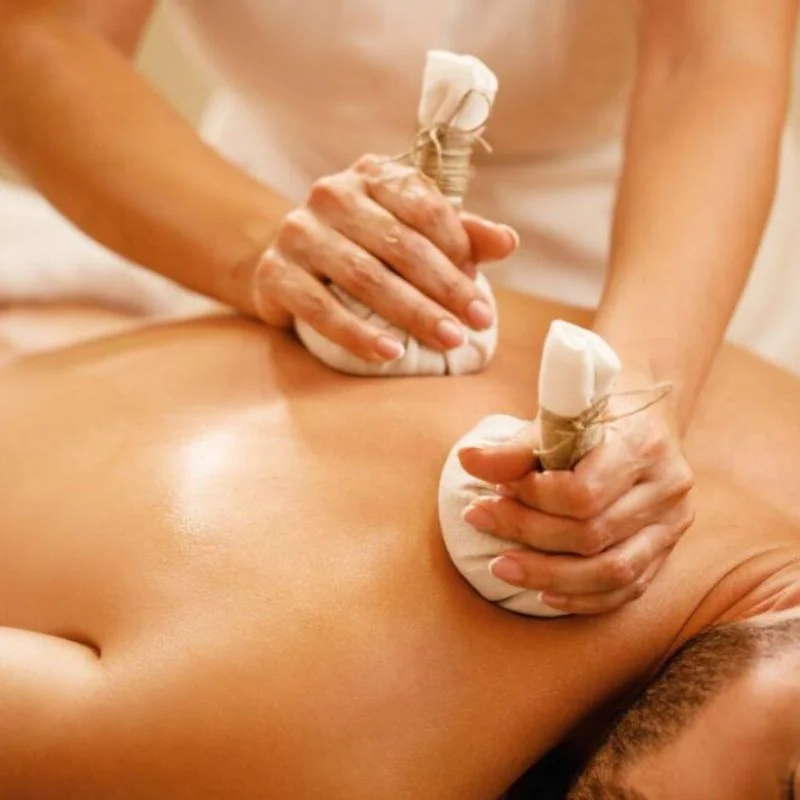
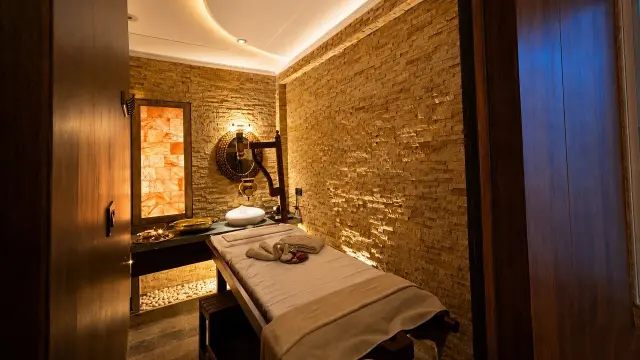
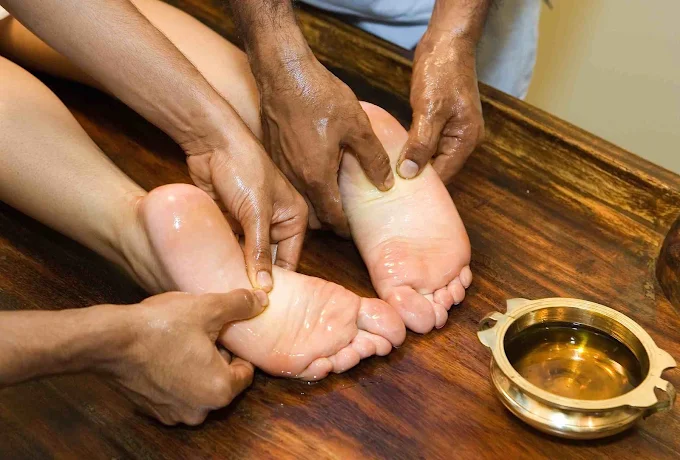
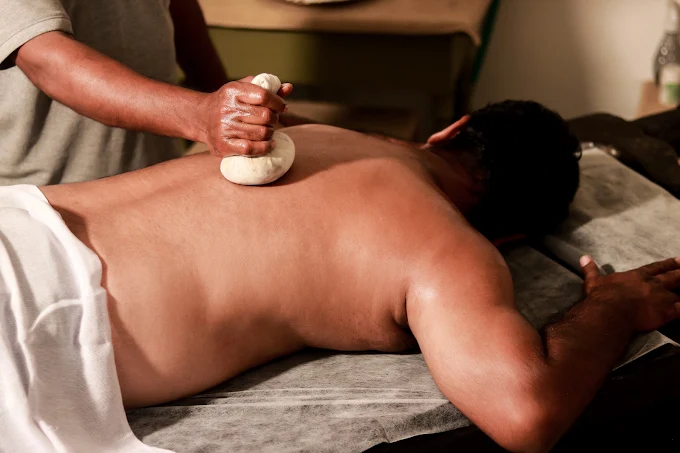
You begin by changing into a simple treatment garment and lying on a wooden or padded table. The therapist warms a medicated or herbal oil and applies it generously, starting at the head and scalp and working down the whole body. The strokes are long and flowing along the limbs and circular over the joints, and the pressure is usually steady rather than deep. In some traditions two therapists work together, one on each side of the body, in a synchronized rhythm.
A session commonly lasts about forty-five to sixty minutes. Afterward you are usually left to rest for a few minutes, and the oil is often removed with a warm bath or a gentle steam. Many guests describe feeling warm, loose, and deeply quiet, and some drift off to sleep.
How the Oil Is Chosen
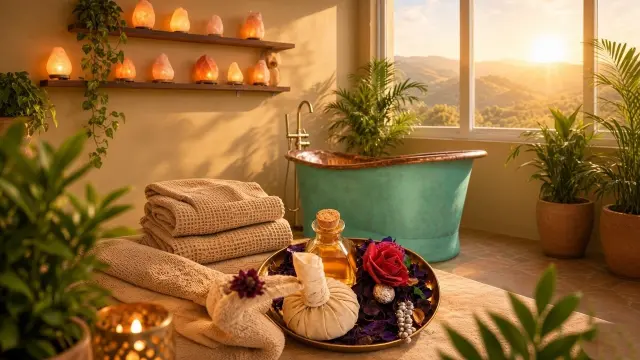
One thing that sets Abhyanga apart from a general massage is that the oil is chosen for you. Sesame oil is the most traditional choice and is considered warming. Other oils, such as coconut, are traditionally linked with a cooler effect. Medicated oils prepared with herbs may be used depending on the plan.
Traditionally, the choice is guided by your constitution, or dosha, and by the season. A person with a strong Vata nature, for example, is often given warm, grounding oils, while someone with a strong Pitta nature may be given cooling ones. The exact choice depends on your consultation, not on a general rule.
How It Differs From a Spa Massage
A spa massage usually focuses on relaxation, and the oil is picked for scent or feel. Abhyanga is built around an Ayurvedic assessment, and the oil, the pressure, and the timing are chosen with your constitution in mind. It also tends to be part of a wider routine of regular meals, rest, and quiet, instead of a standalone treat.
None of this makes a spa massage a bad thing. They simply serve different purposes, and it helps to know which one you are booking.
What Is Known, and What Is Not
Abhyanga is traditionally described as calming and nourishing, and many people find it relaxing. It is also described as supporting healthy-looking skin and a settled sleep routine. These descriptions come from traditional practice and from the experience of practitioners and guests. Scientific research on Abhyanga is limited, so it is best seen as a relaxing traditional therapy rather than a proven treatment for any condition. If you have ongoing health problems, please see a doctor, and treat Abhyanga as a complement to medical care, not a replacement.
Who Should Check With a Doctor First
Abhyanga is gentle, but it is not right for every situation. Please speak to a doctor before booking if any of these apply:
- You are pregnant
- You have a fever, a heavy cold, or an upset stomach
- You have a skin condition, open wounds, or a rash
- You have swelling or a recent injury
- You manage a medical condition or take regular medication
This is why a consultation comes first at any trustworthy retreat. The doctor decides whether Abhyanga is suitable, which oil to use, and how it fits into your plan.
Trying Abhyanga at Home
A simple version of self-massage is easy to bring home, and it is one of the habits guests most often keep after a retreat. If you would like to try it:
- Warm a small amount of a plain oil, such as sesame or coconut, by standing the bottle in hot water.
- Test a small patch of skin first to make sure it suits you.
- Massage the oil in with long strokes on the limbs and circles on the joints, taking ten to fifteen minutes.
- Rest for a few minutes, then wash off with warm water.
Do it a few times a week, not necessarily every day. Take care in the shower, because oil makes the floor slippery, and wash any towels separately, since oil can stain them. If you take medication or have a skin condition, check with your doctor before starting.
Abhyanga at a Wellness Retreat in Rishikesh
Rishikesh has a long tradition of Ayurveda and yoga, and the quiet setting beside the Ganga suits a therapy that is all about slowing down. If you are comparing a wellness retreat in Rishikesh, a few simple questions will tell you a lot. Will a doctor see me before the therapy? Is the oil chosen for me? Who gives the massage, and how are they trained? Clear answers are a good sign. For a wider look at how a retreat fits together, see our guide to how Ayurveda, yoga, and Ganga-side living work together.
Frequently Asked Questions
Is Abhyanga the same as a regular oil massage?
They look similar, but Abhyanga is guided by Ayurvedic principles. The oil is chosen for your constitution, and the massage is usually part of a wider routine or program.
How long does a session last?
Commonly forty-five to sixty minutes, though this varies by retreat and by plan.
Will I feel oily afterward?
Some oil usually remains on the skin. Most retreats offer a warm bath or steam afterward, and many guests find the skin feels soft.
Can I have Abhyanga if I am pregnant?
Please check with a doctor first. Pregnancy is one of the situations where extra care is advised.
Is Abhyanga part of Panchakarma?
It is often the first step of a Panchakarma program, used to prepare the body for later therapies, and it can also be enjoyed on its own as a wellness therapy.
Can I do Abhyanga every day?
Many people use it as a daily habit, but a few times a week is a realistic start. If you have a health condition, ask your doctor what suits you.
A Simple Therapy With a Long Tradition
Abhyanga is easy to describe and hard to forget once you have tried it. Understanding what it is, what is known about it, and who should take care makes it much easier to decide whether it belongs in your plans.
If you would like to experience it as part of a doctor-guided program, you can learn more about The Neeraj Ganga Wellness Retreat, an Ayurvedic wellness retreat in Rishikesh beside the Ganga.