Seven days is one of the most commonly chosen durations for an Ayurvedic retreat in India, long enough to move past initial relaxation into something that actually shifts how your body feels, short enough to fit into a real holiday. But “7-day retreat” doesn’t tell you much on its own. What actually happens during those seven days varies a lot depending on the retreat, and knowing what a properly structured week looks like helps you judge whether a program is genuine before you book it.
Here’s an honest walkthrough of what a well-run 7-day Ayurvedic retreat actually involves.
Why Seven Days Specifically
This duration isn’t arbitrary. Classical Ayurvedic guidance treats 5-7 days as the minimum needed for a basic Panchakarma introduction, enough time to move through preparation, the main therapeutic procedures, and initial recovery, without compressing the process in a way that undermines it. A single day or weekend program borrowing the Panchakarma name almost never follows this actual structure. Seven days does, if the retreat is run properly.
Day 1: Arrival and Consultation
The week should start with an assessment, not a treatment. A qualified Ayurvedic doctor evaluates your body constitution (Prakriti), current health concerns, lifestyle, and goals before recommending anything. This consultation shapes everything that follows, which specific therapies you’ll receive, what your meals should look like, how the week should be paced for your specific condition.
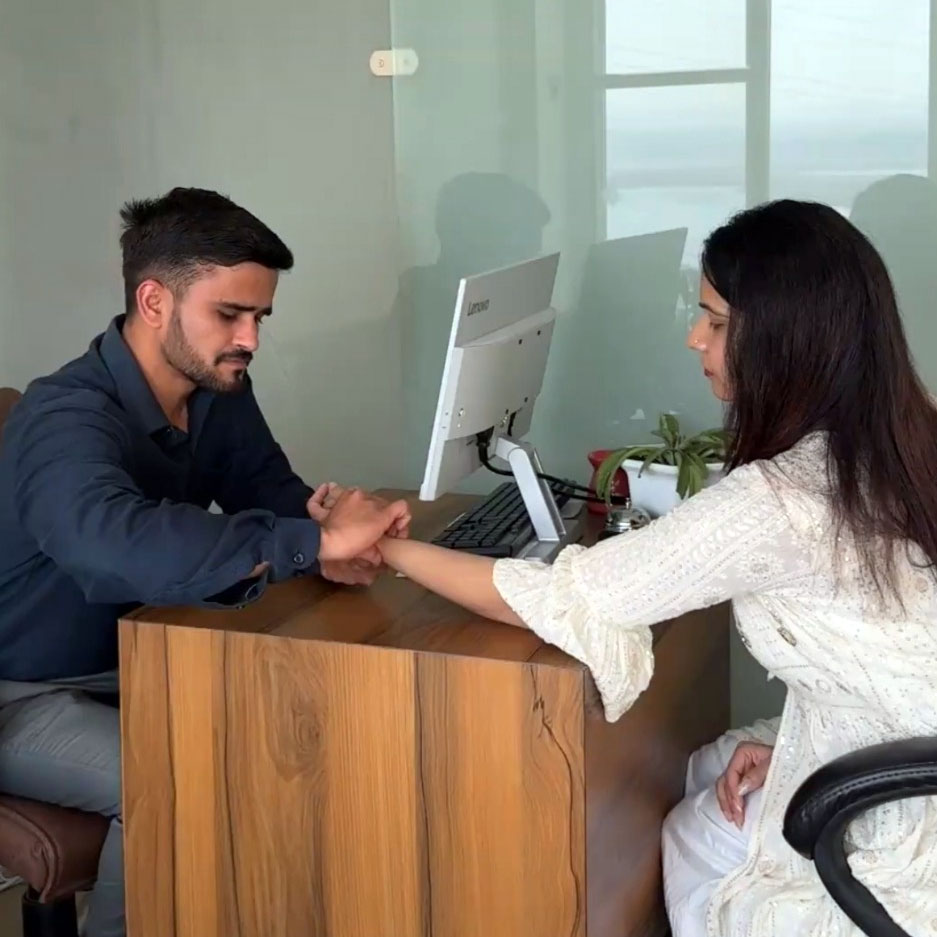
If a retreat skips this and hands you a fixed schedule on arrival, that’s worth noticing. The consultation is what makes the rest of the week personalized rather than generic.
Days – 2 And 3 Preparation (Purvakarma)
In classical Ayurveda treatment doesn’t begin with the main procedures immediately. The body needs preparation first, often through gentle oil massage (Abhyanga) and herbal steam therapy, which help loosen and mobilize toxins (Ama) before deeper treatment begins. This phase also typically includes your first full days of daily yoga and meditation, and a shift toward Satvik meals timed to support digestion.

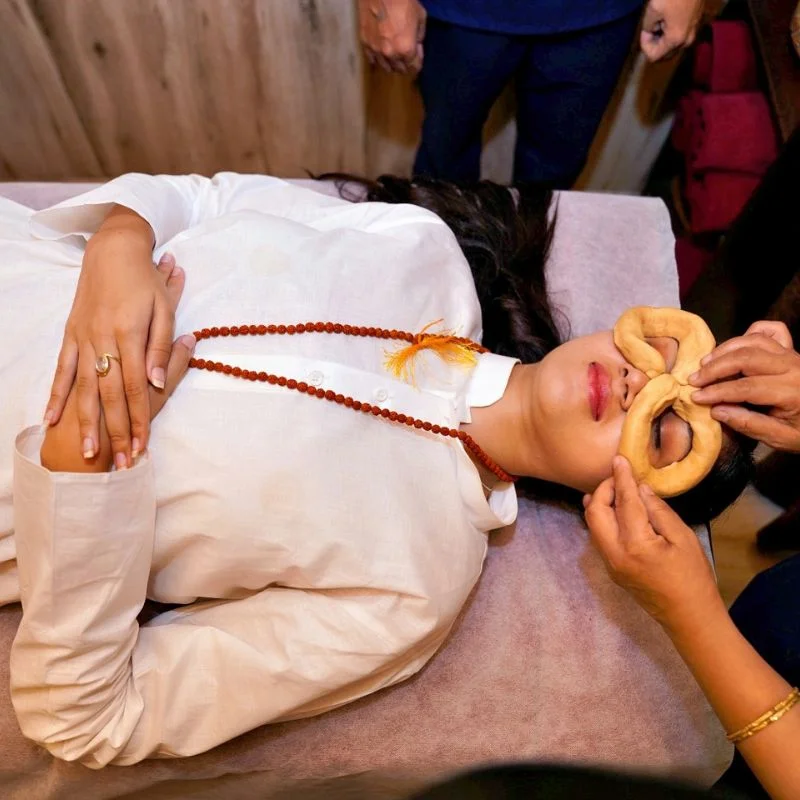
This is usually where guests start noticing the pace of the retreat itself doing some of the work, less stimulation, more consistent rhythm, genuine rest.
Days – 4 And 5 Main Treatment Phase (Pradhankarma)
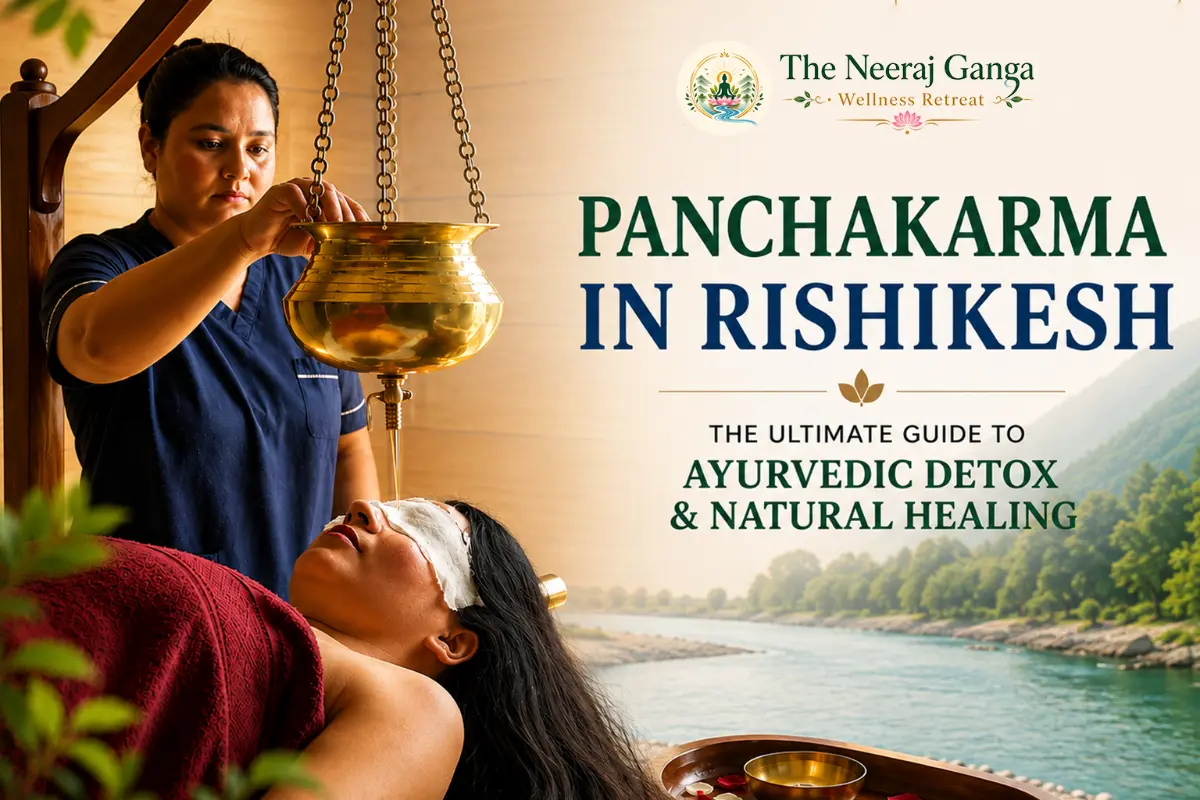
This is the core of the week, the specific therapies chosen during your consultation, whether that’s Abhyanga and Shirodhara for stress and nervous system balance, or more structured procedures if your program includes elements of Panchakarma. Treatment during this phase tends to be more intensive, and it’s normal to feel physically tired as the body responds, this is part of the process, not a sign something’s wrong.
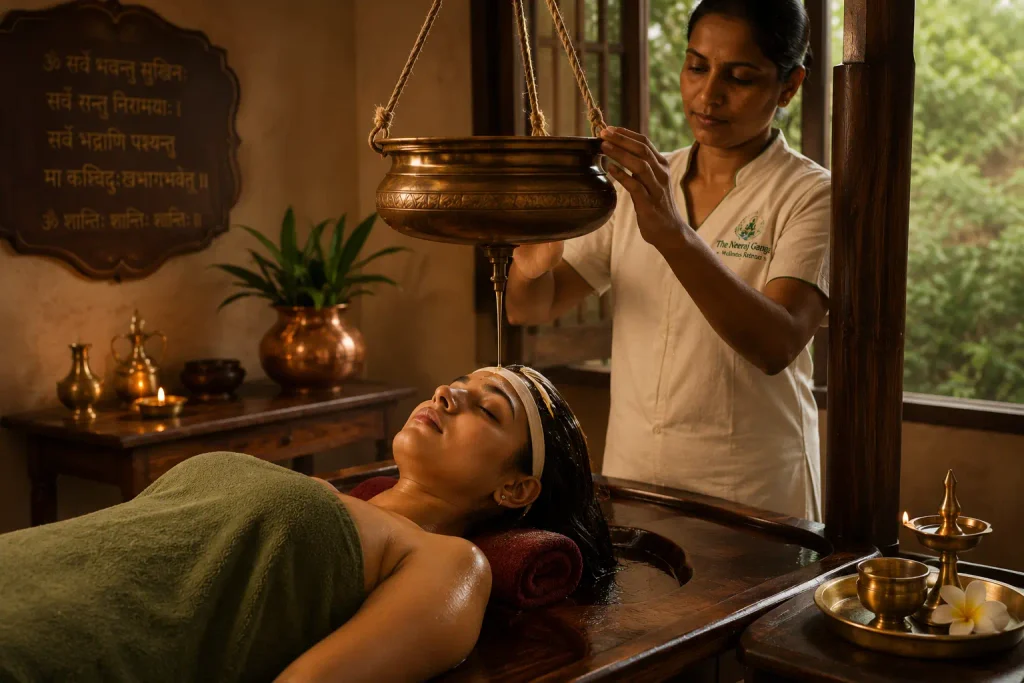
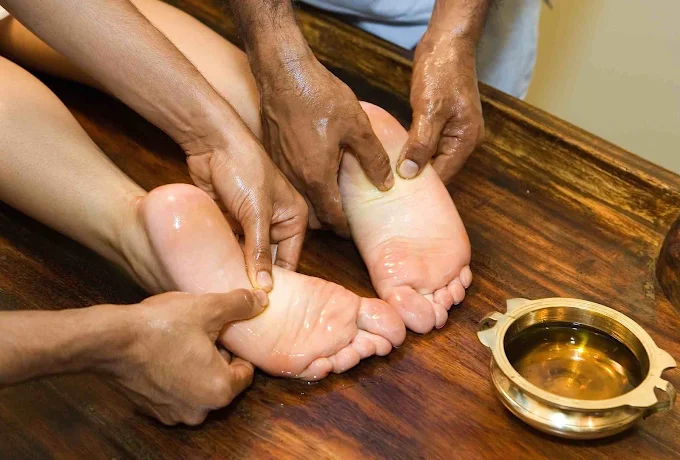
Daily yoga and meditation typically continue alongside treatment, though often gentler than the earlier days, since the body is doing real work internally.
Days – 6 And 7 Recovery and Integration (Paschatkarma)
The final days shift toward recovery, allowing the body to settle after treatment rather than piling on more intensive therapy right up to departure. This is also typically when guests receive lifestyle and dietary guidance for continuing progress after they leave, what to eat, how to maintain routine, which habits from the week are worth keeping.
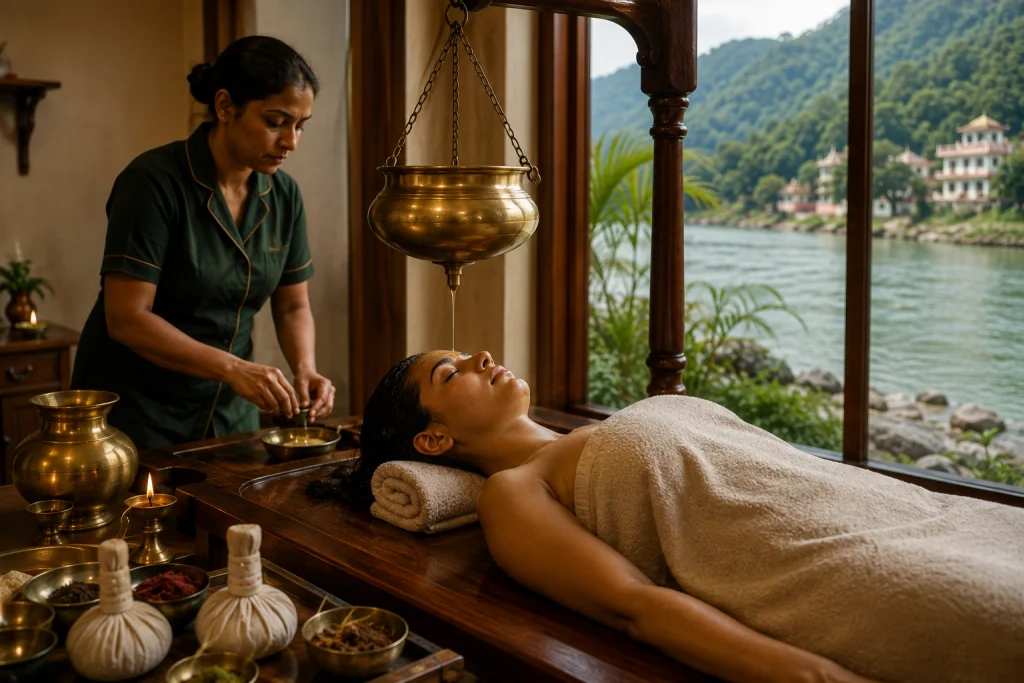
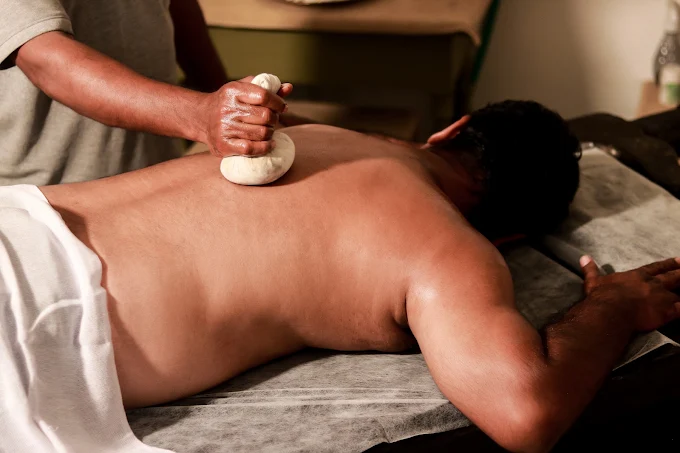
A retreat that treats day 7 the same as day 3, still pushing intensive treatment right up to checkout, isn’t respecting this recovery phase properly.
What Ties the Whole Week Together
Beyond the therapies themselves, a few things should be consistent throughout a genuine 7-day program: Satvik meals planned around your specific treatment, not a generic vegetarian menu, a consistent daily rhythm (wake time, meal timing, rest periods) since irregularity itself works against Ayurvedic treatment, and an environment that supports rather than competes with the process, quiet surroundings matter more than most people expect going in.
What This Looks Like in Practice
The 7-Day Renewal package at The Neeraj Ganga Wellness Retreat in Rishikesh follows this structure directly: consultation with the retreat’s Ayurvedic doctor on arrival, daily Ayurvedic therapies planned around that assessment, sunrise and evening yoga and meditation on the riverside deck, Satvik meals sourced largely from the retreat’s own organic farm, and a personalized evening Ganga Aarti woven through the week. The approach reflects founder Dr. R.K. Gupta’s four decades in healthcare and Ayurvedic practice, treatment paced and sequenced properly, not compressed to fit a marketing package.
Is Seven Days Enough?
It depends on your goal. For general stress relief, sleep issues, or a genuine reset from a demanding routine, seven days is usually sufficient to feel a real difference. For a complete, classical Panchakarma detox, many Ayurvedic doctors recommend 10-14 days or longer for the deepest therapeutic benefit. Seven days is a strong, realistic middle ground, enough to move past surface-level relaxation, without requiring the time commitment of a longer program.
What to Ask Before Booking a 7 Day Retreat
A few honest questions worth asking regardless of which retreat you’re considering: Does the week actually follow a preparation, treatment, and recovery structure, or is every day identical? Is your specific consultation genuinely shaping the schedule, or is everyone on the same fixed 7-day itinerary? Does the retreat send you home with real guidance for continuing progress, or does the program just end?
Frequently Asked Questions
Will I feel tired during a 7-day Ayurvedic retreat?
Some fatigue during the main treatment phase (days 4-5) is normal and expected, it’s part of the body processing and releasing toxins, not a sign of a problem. A well-structured week accounts for this with a proper recovery phase toward the end.
Do I need to be experienced with Ayurveda to do a 7-day retreat?
No. Most 7-day programs are genuinely accessible to first-timers, since the consultation adjusts the pace and intensity of treatment to your specific starting point, not a fixed assumption of prior experience.
Is 7 days enough for real results, or do I need longer?
Seven days is generally enough for meaningful stress relief, better sleep, and a genuine reset. Deeper detox goals, particularly full classical Panchakarma, often benefit from 10-14 days or more, worth discussing directly with your consultation before choosing a duration.
What should I do differently on the last day compared to the first?
The first day is about assessment and easing in. The last day should focus on recovery and practical guidance for continuing your progress at home, not intensive treatment. If a retreat treats both days identically, that’s worth asking about.
Your Journey Doesn’t End at Checkout
A well-run 7 day Ayurvedic retreat isn’t seven isolated days of treatment, it’s a structured arc: assessment, preparation, treatment, and recovery, each phase building on the one before it. What separates a genuine program from a diluted one isn’t the number of therapies you receive, it’s whether that structure is actually respected, whether your consultation genuinely shapes the week, and whether you leave with guidance for continuing what you started, not just a checkout and a goodbye.
If you’re ready to give yourself that time, seven days, guided by a real consultation, paced properly, and grounded in decades of genuine Ayurvedic practice, The Neeraj Ganga Wellness Retreat in Rishikesh is here to walk that week with you.