Most wellness retreats list Ayurveda, yoga, and a scenic location as three separate features on a brochure, as if you could swap out the river for a swimming pool and the experience would stay roughly the same. At a genuine wellness retreat in Rishikesh near the Ganga, that’s not actually true. These three elements aren’t decoration layered around each other, they function as one connected system, and understanding how helps explain why Rishikesh specifically produces a different kind of result than a wellness retreat anywhere else.
Ayurveda and Yoga Were Never Meant to Be Separate
It’s easy to think of Ayurveda as the medical side of a retreat and yoga as the physical side, two different departments under one roof. Classically, they were never divided this way. Both systems share the same underlying framework, understanding the body through its constitution (Prakriti) and current state of balance among the doshas, Vata, Pitta, and Kapha.
A yoga practice chosen without regard to your Ayurvedic constitution can work against you rather than for you, a highly stimulating practice for someone already Vata-aggravated, for instance, can worsen the very restlessness it’s meant to calm. This is why a genuinely integrated Ayurvedic wellness retreat in Rishikesh treats yoga as part of your treatment plan, not a separate activity offered alongside it. The style, pace, and timing of your yoga sessions should reflect the same consultation that shapes your therapies and diet.
Why the Ganga Isn’t Just Scenery
This is the part most wellness marketing gets wrong. A river view is treated as an amenity, something nice to look at from your balcony. In the context of a genuine Ayurvedic and yogic approach, environment plays an active role in treatment, not a passive backdrop to it.
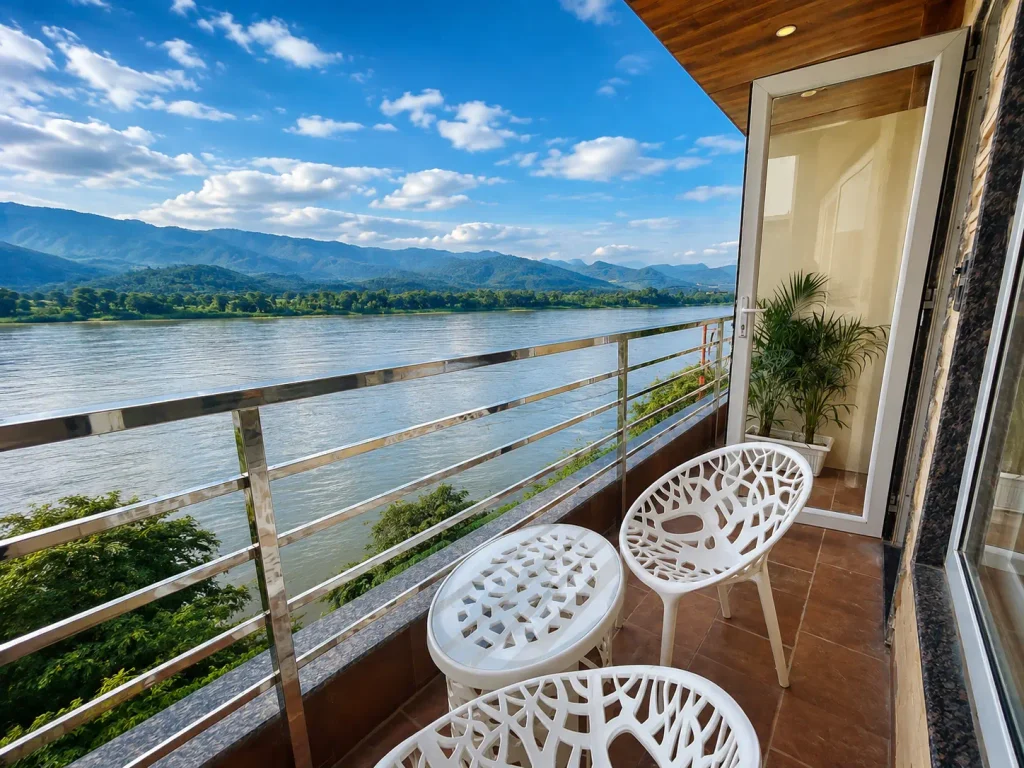
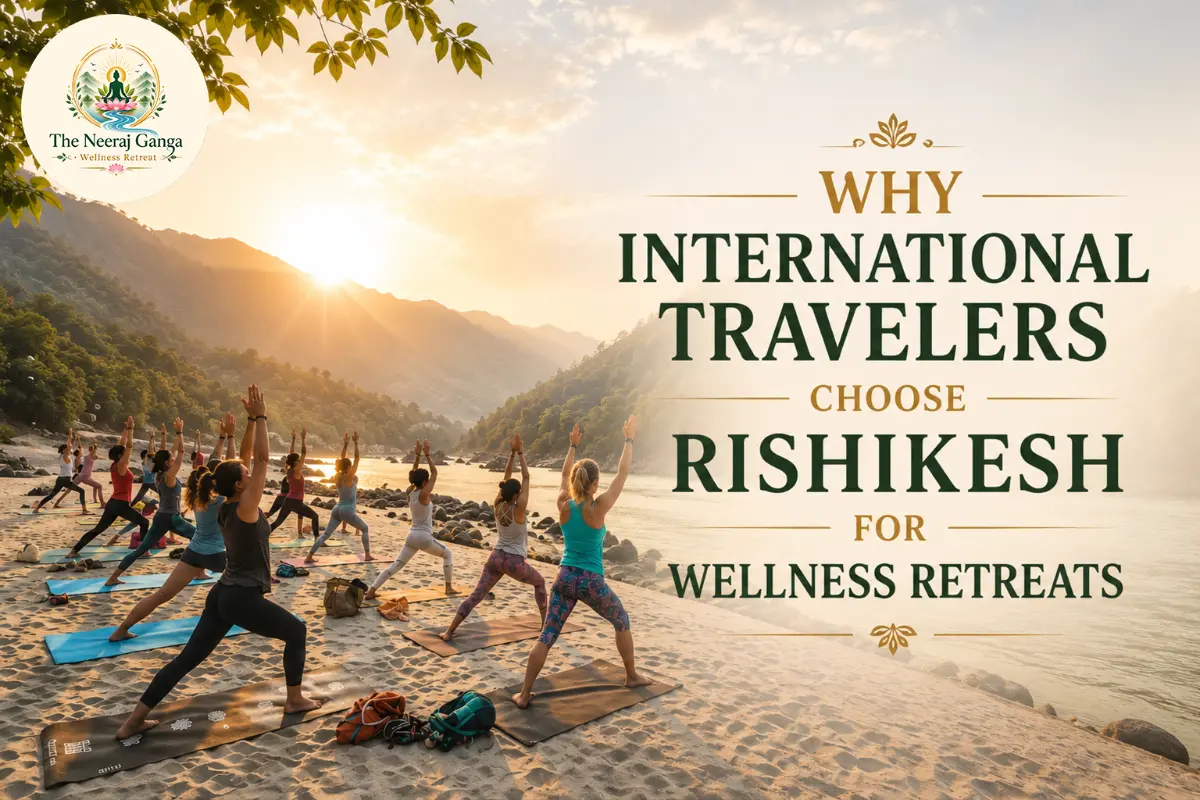
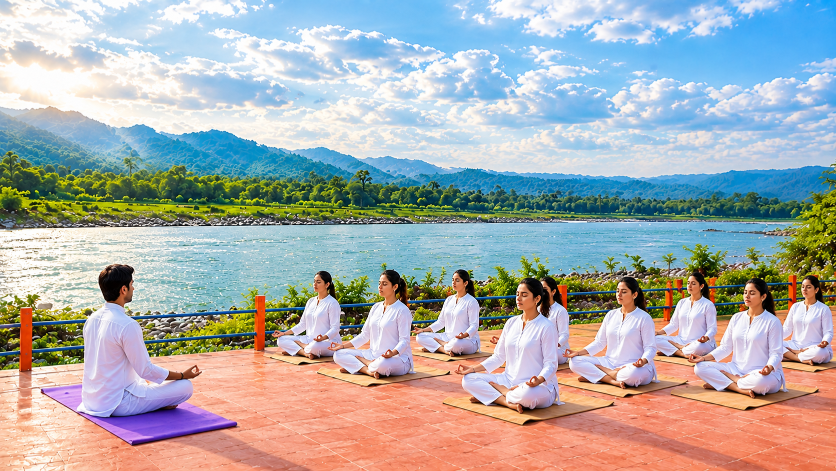
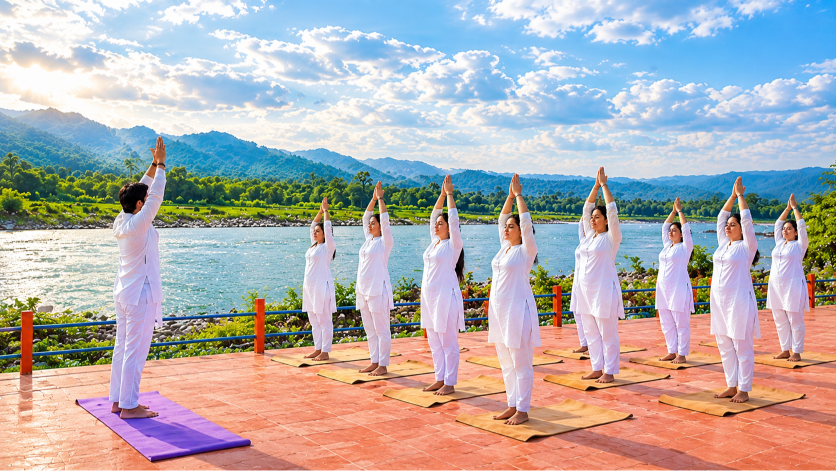
Ayurveda has long recognized that surroundings affect the nervous system directly, quiet, moving water, and natural rhythm genuinely support the kind of calm a Vata-balancing therapy is trying to produce. Practicing yoga on a riverside deck at sunrise, with the sound of the Ganga instead of traffic or air conditioning, isn’t simply more pleasant, it changes what the practice is actually able to do for your nervous system that same session.
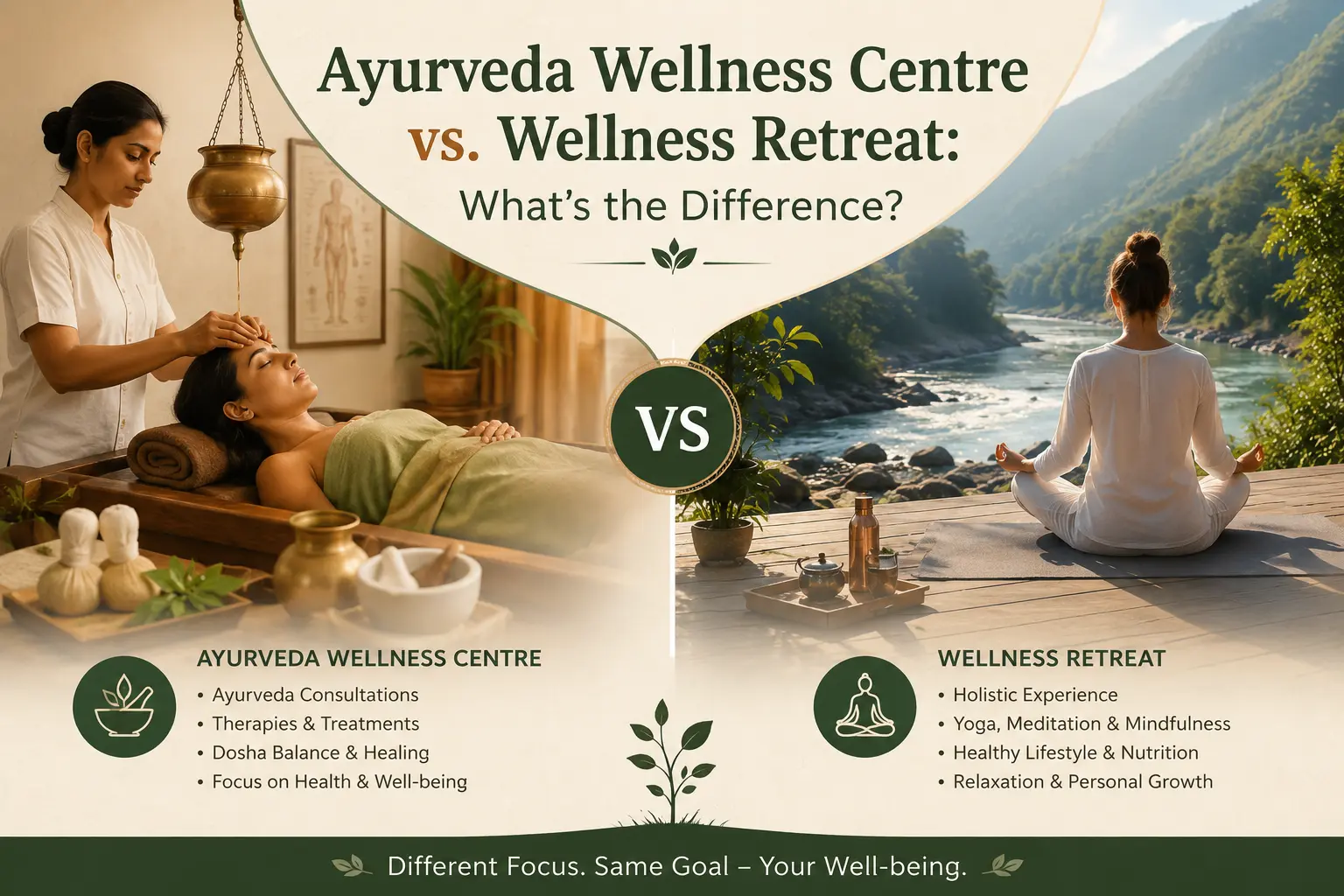
This is also why the retreats built around the Ganga in Rishikesh function differently than an equally well-run Ayurvedic centre in a city hotel. The therapies and consultation might look identical on paper. The lived experience, and often the outcome, genuinely isn’t.
How the Three Elements Actually Work Together, in Practice
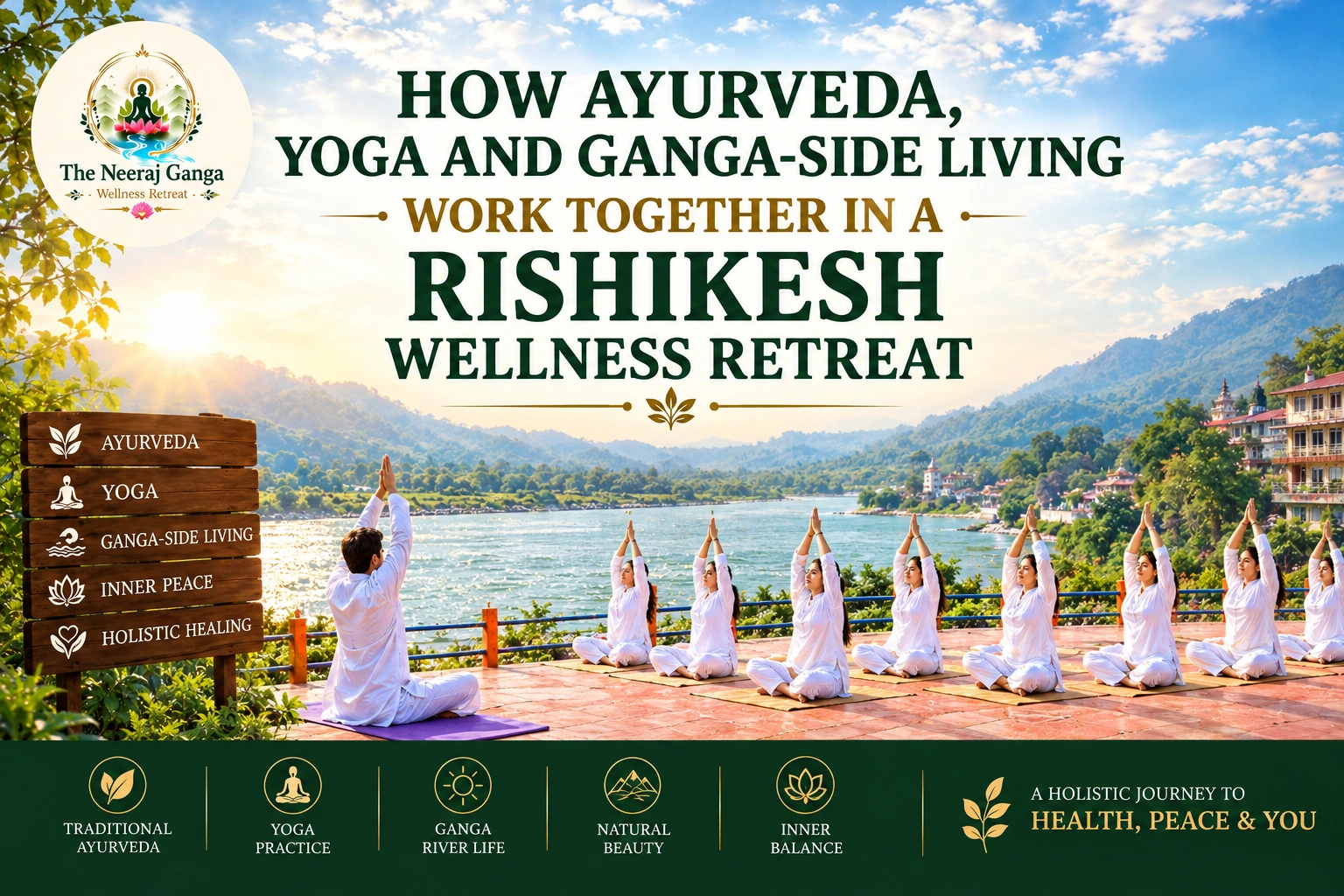
A well-integrated day at a Ganga-side Ayurvedic retreat generally moves through the three elements as one continuous rhythm, not three separate blocks. Morning yoga, paced according to your constitution, takes place by the river as the day begins. Ayurvedic therapies later in the day are chosen based on the same consultation that shaped your yoga practice, addressing the same underlying imbalance from a different angle. Evening winds down with quiet time by the water, sometimes a personalized Ganga Aarti, supporting the nervous system’s transition into rest, which in turn affects how well the body processes and responds to that day’s treatment.


None of these pieces are doing their full work in isolation. The yoga session supports what the therapy is trying to achieve. The environment supports what both are trying to achieve. Removing any one piece doesn’t just make the day less pleasant, it genuinely changes how effectively the other two function.
What This Looks Like at The Neeraj Ganga Wellness Retreat
At The Neeraj Ganga Wellness Retreat, this integration isn’t an add-on description, it’s the actual structure of every stay. Every guest begins with a consultation with the retreat’s Ayurvedic doctor, and that same assessment informs the therapies, the pace and style of daily yoga on the riverside deck, and even meal timing drawn from the retreat’s own organic farm.
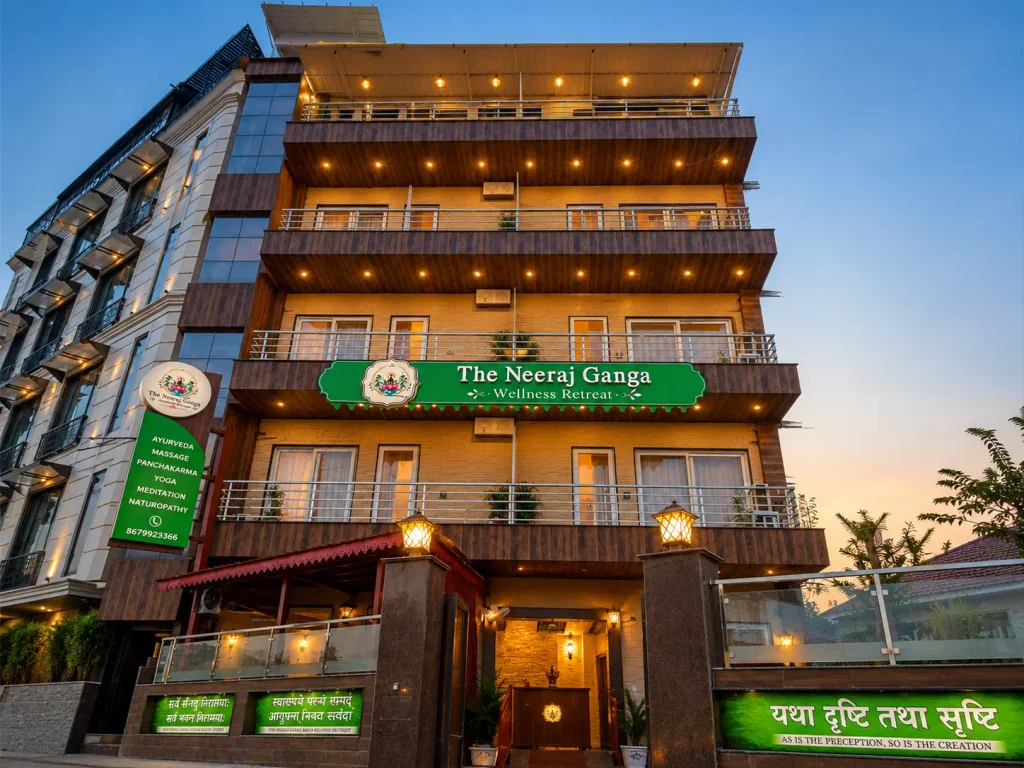
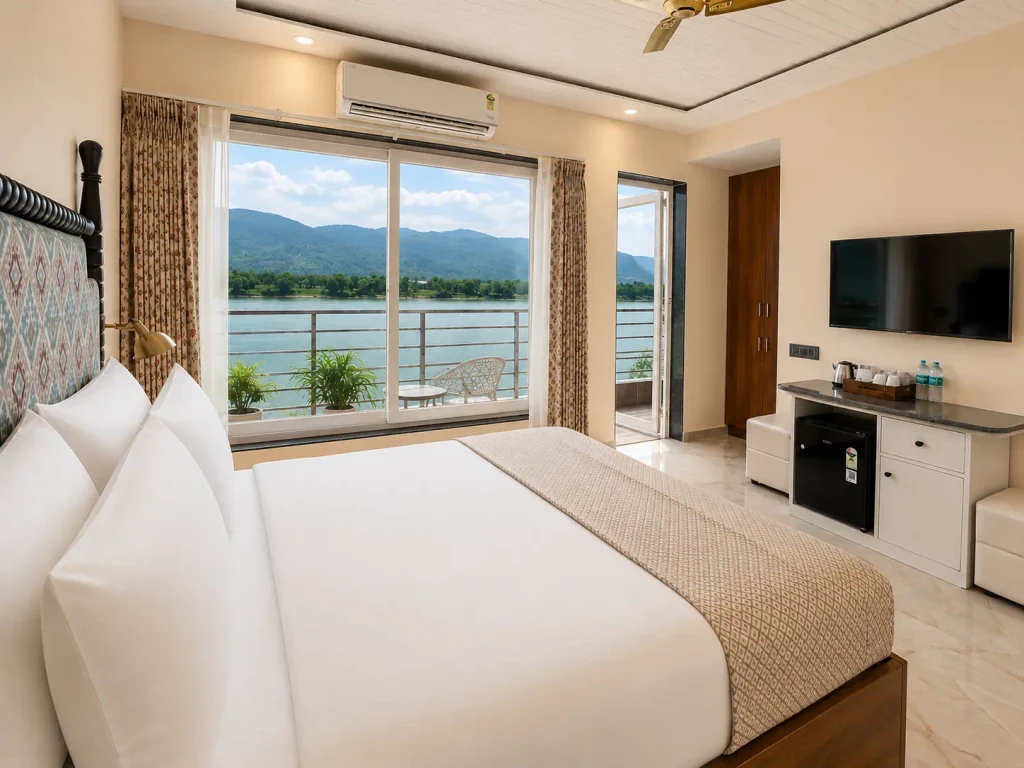
Wellness here is woven into the everyday experience rather than treated as a separate activity. From freshly prepared Satvik meals using ingredients from the retreat’s organic farm to yoga and meditation beside the Ganga, each element is designed to create a calm, mindful rhythm throughout the stay, not a schedule of disconnected activities. Guests also encounter thoughtful details that reinforce this same rhythm: a traditional copper bathtub, comfortable Ganga-view spaces, and peaceful surroundings built to support genuine rest rather than compete with it.
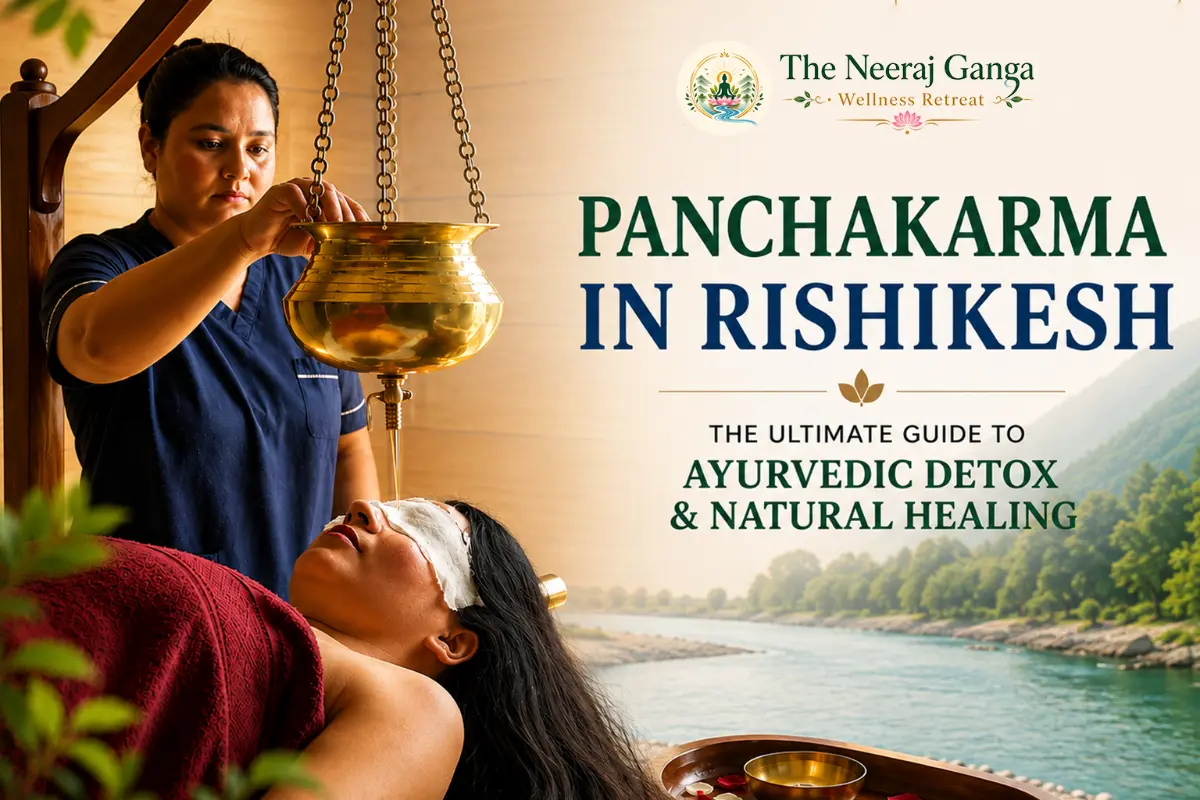
As a Panchakarma retreat in Rishikesh specifically, this integrated structure matters even more, a proper Panchakarma programmes depends on preparation, treatment, and recovery phases working in sequence, and yoga, diet, and environment all need to move in step with that sequence, not sit apart from it.
Why This Matters When You’re Comparing Retreats
If you’re comparing wellness retreats in Uttarakhand, or holistic wellness retreats in Rishikesh more broadly, this integration is genuinely one of the clearest signals of quality. Ask directly whether your yoga sessions are shaped by your Ayurvedic consultation, or scheduled the same for every guest regardless of their program. Ask whether therapy timing considers the rest of your day, or is simply booked into whatever slot is available. A retreat where these three elements are actually connected will have clear, specific answers. One where they’re just three separate features usually won’t.
Frequently Asked Questions
Does yoga style actually change based on an Ayurvedic consultation?
Yes, in a properly integrated program. A Vata-dominant guest dealing with restlessness generally benefits from slower, grounding practice, while a Kapha-dominant guest may need something more energizing. A one-size-fits-all yoga schedule misses this distinction entirely.
Is the riverside location just for atmosphere, or does it actually affect treatment?
Environment plays a genuine, active role in Ayurvedic and yogic practice, quiet, natural surroundings support the nervous system in ways a busy or artificial environment doesn’t, which is part of why Ganga-side retreats in Rishikesh are considered different from urban wellness centres offering similar therapies.
Do I need prior yoga experience for this integrated approach to work?
No. The consultation adjusts both your yoga practice and your therapies to your actual starting point, not a fixed assumption of experience, this is true whether you’re a complete beginner or have practiced for years.
How is this different from a regular yoga retreat?
A yoga-only retreat generally offers a fixed class schedule without individual Ayurvedic assessment. An integrated Ayurvedic wellness retreat builds your entire day, including yoga, around a personal consultation, so each element supports the others rather than running independently.
Final Thoughts
Ayurveda, yoga, and the Ganga aren’t three separate reasons to choose a wellness retreat in Rishikesh, they’re one system, and the strength of that system depends on how closely they’re actually connected in practice. A retreat that treats them this way doesn’t just look more thoughtfully put together, it functions differently, session by session, day by day. Before booking anywhere, it’s worth asking directly whether your yoga, your therapies, and your surroundings are genuinely working from the same plan, or simply sharing the same brochure.